
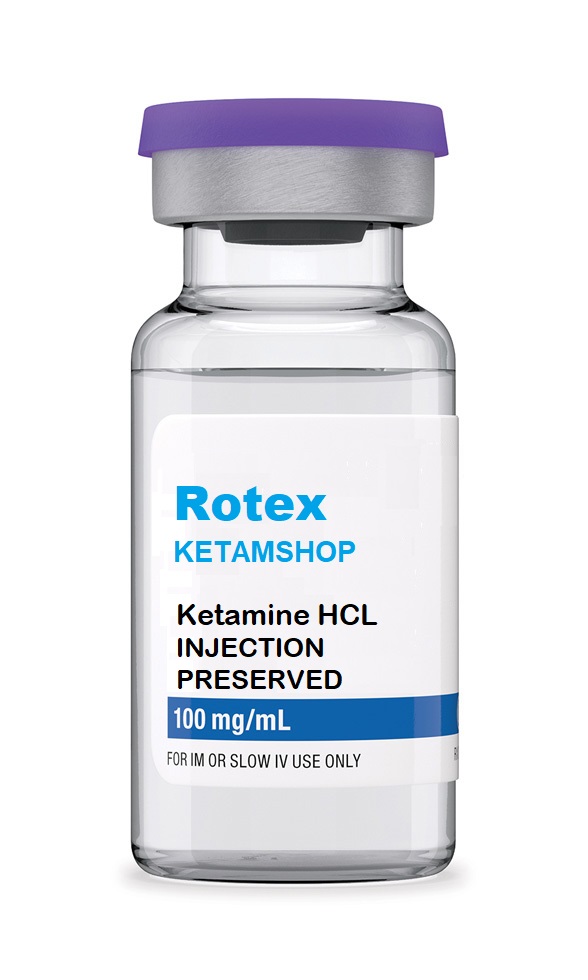

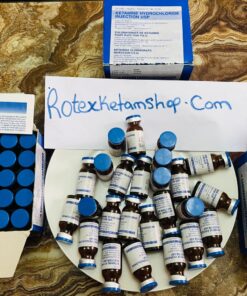
Ketamine Liquid 10mL
Price range: $675.00 through $4,300.00
The most frequent application of ketamine liquid for sale is in veterinary care. Before, during, and after surgery, it can be used to induce and maintain general anesthesia in humans.
Ketamine Liquid For Sale is administered medically either intravenously (IV) or by injection into a muscle.
237,725 g/mol for the molar mass
Ketamine Liquid: What It Actually Is
Ketamine in liquid form is a clear, colorless, and odorless anesthetic that works quickly. In medicine, it is used to help with anesthesia and pain control, especially in controlled hospital settings. GET IN TOUCH
It works by interrupting normal communication between the brain and nervous system. This creates a sense of detachment from the body and surroundings.
Outside medical use, ketamine is sometimes misused because of its hallucinogenic and dissociative effects. On the street, it is commonly referred to as “Special K,” “K,” or “Cat Valium.” Gas Chromatography–Mass Spectrometry (GC–MS). Trí ghabhdóirí NMDA a bhlocáil, laghdaíonn sé comharthaí pian agus feabhsaíonn sé cáilíocht beatha othar.
Ketamine liquid is a pharmaceutical form of ketamine, a dissociative anesthetic used in controlled medical settings. It has been studied for decades in both surgical anesthesia and, more recently, in mental health treatment.
In clinical environments, it is handled carefully, dosed precisely, and administered under supervision. Outside of that setting, its use becomes complicated quickly, both legally and medically.
How Ketamine Works in the Body
Ketamine affects the brain differently from traditional sedatives or antidepressants. It primarily interacts with NMDA receptors, which are involved in glutamate signaling.
In simpler terms, it temporarily changes how the brain processes signals related to pain, mood, and perception. This is why it can produce dissociative effects, but also why it has been studied for treatment-resistant depression.
Medical Uses of Ketamine Liquid
In healthcare, ketamine liquid is used in specific situations such as:
- General anesthesia in surgery
- Emergency medicine for sedation and pain control
- Treatment-resistant depression in controlled clinical programs
- Acute suicidal ideation management in monitored settings
These uses are tightly regulated. It is not a casual medication, and it is not prescribed without oversight.
Effects and Experience in Clinical Contexts
Under medical supervision, ketamine can produce:
- A dissociative state
- Reduced perception of pain
- Temporary changes in sensory awareness
- Calm or detached mental state
In psychiatric treatment settings, patients may also report rapid shifts in mood after administration, though responses vary widely.
Risks and Considerations
Ketamine is not without risk. Even in medical environments, professionals monitor patients closely.
Key concerns include:
- Increased heart rate and blood pressure
- Confusion or disorientation
- Potential for psychological distress
- Risk of misuse outside clinical supervision
- Dependence with repeated non-medical use
Long-term effects of unsupervised use are still being studied, and that uncertainty matters.
Legal and Medical Oversight
In most countries, ketamine is classified as a controlled substance. That means it is legal only within specific medical frameworks.
Access is restricted for a reason. The difference between therapeutic use and misuse is not just dosage. It is environment, monitoring, and intent.
Why Research Interest Exists
Ketamine has drawn attention because it challenges older models of how mood disorders are treated. The rapid response seen in some patients has made it an important area of ongoing research.
But interest in the compound should not be confused with accessibility. Clinical use is structured, and self-directed use carries significant risk.
Final Thoughts
Ketamine liquid sits at an unusual intersection of anesthesia, psychiatry, and neuroscience. It is medically valuable, but only when used correctly and responsibly.
If you are researching it, focus on verified clinical data and peer-reviewed studies. That is where the real understanding comes from, not fragmented online claims.
| Vials 10ml | 5 Vials, 10 Vials, 50 Vials |
|---|
Būkite pirmas aprašęs “Ketamine Liquid 10mL”
Panašūs produktai

Ketamine Hydrochloride


Anesthesia
Ketamine Hydrochloride
Ketamine Powder / Ketamine Powder For Pain / Ketamine Hydrochloride
Anesthesia
Ketamine Hydrochloride
Ketamine Hydrochloride
 Lithuanian
  English
  German
  Dutch
Dutch  Estonian
  Italian
  Croatian
  Arabic
  Belarusian
  Czech
Czech  Danish
  Greek
Greek  Spanish
  French
  Bosnian
  Polish
  Georgian
  Chinese
  Finnish
  Hungarian
  Latvian
Atsiliepimai
Atsiliepimų dar nėra.